
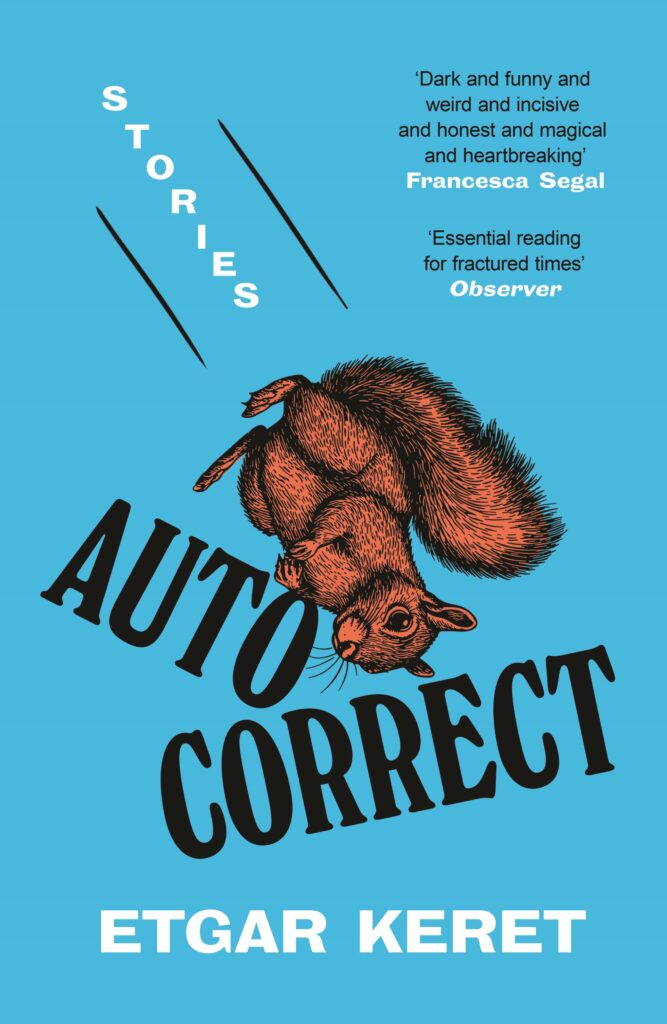
Imagine a world in which you could take back the stupid thing you just said, unspill the coffee, avoid the accident, roll life back thirty seconds and do it over again – this time the right way. In Etgar Keret’s universe, all things are possible. A man can take a yoga class that genuinely transforms his life. A son has the chance to redo a fateful exchange with his father. An alien can offer a guided tour of the destroyed earth. And an angry squirrel can wreck a wedding.
Ranging from sci-fi scenarios to fictional thought-experiments and short vignettes, the stories here all deliver the irreverence, surprises, existential unease, hope and humanity we have come to expect from Etgar Keret – one of the most original and entertaining storytellers at work today.
About the author
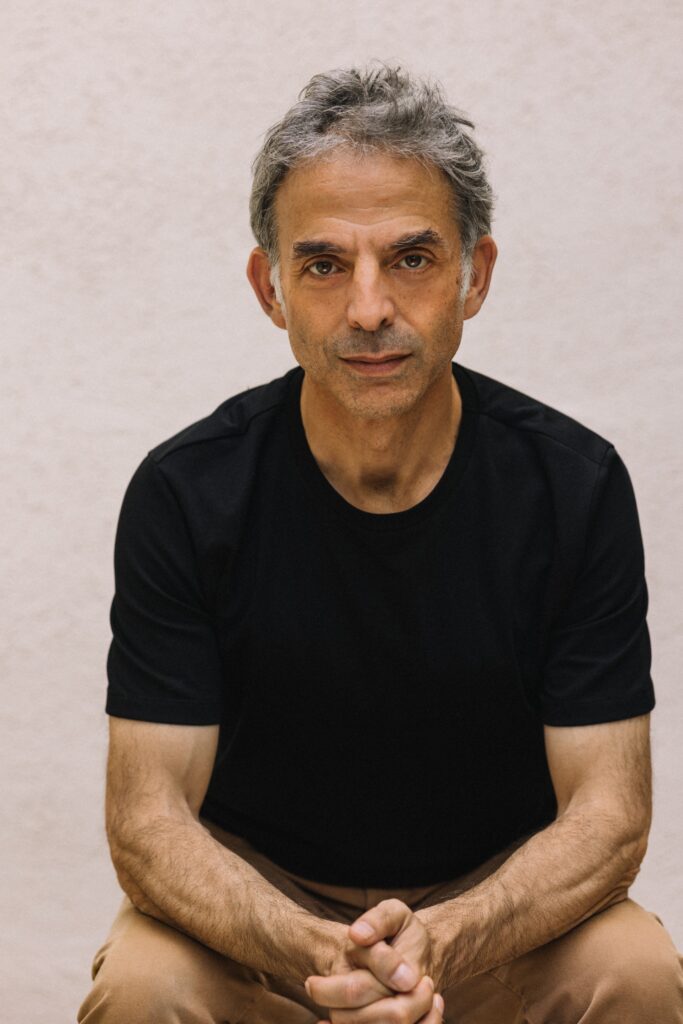
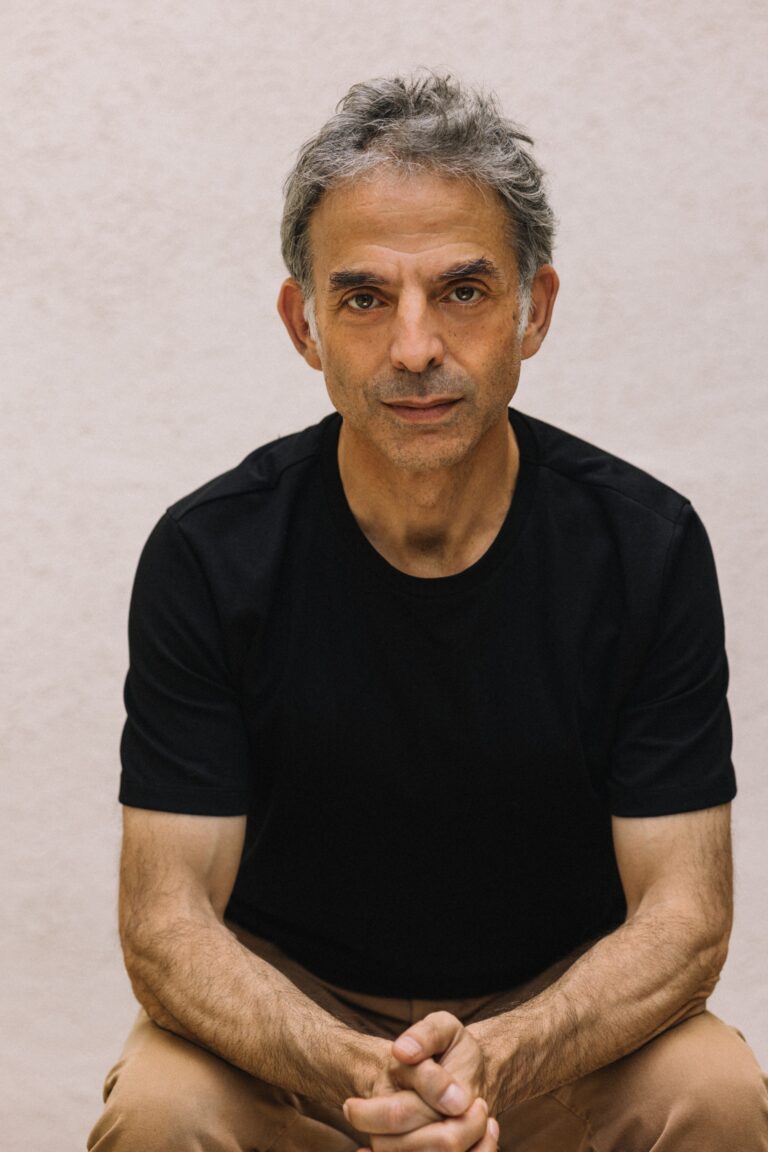
Etgar Keret is the author of six bestselling story collections, which have been published in fifty languages. His writing has been published in the New York Times, Le Monde, the Guardian, the New Yorker, and Esquire and he’s a regular contributor to This American Life. He was the subject of the documentary, Based on a True Story which won an International Emmy in 2018. He has also written a number of screenplays, and Jellyfish, his first film as a director alongside his wife Shira Geffen, won the Caméra d’Or prize for best first feature at Cannes in 2007. His memoir The Seven Good Years was published by Granta in 2015, and the story collection Fly Already in 2019. In 2010 he was awarded the Chevalier medallion of France’s Order of Arts and Letters. He lives in Tel Aviv, and when he is not writing, he teaches at Ben-Gurion University of the Negev and at Tel Aviv University.
“‘It’s hard to think of another writer able to imbue deadpan comedy with the profound range of emotions that Etgar Keret achieves … Essential reading for fractured times.”
Hephzibah Anderson, The Observer
20% off with code: JLFBOOKS
Valid until 7 August 2026
A short story from Etgar Keret - Crab Soup
“As someone who spends his life trying to make sense of the world through stories, I hope you enjoy this short story I wrote, which may be a Jewish habit in its own right.”
The man with the baseball cap sitting at the café in the heart of the jungle is writing a short story. The barefoot waiter staring at him doesn’t know that the man is writing a story. As far as he’s concerned, it could be an email to his accountant, or a message to his wife, or even a heartfelt letter to his ex about how all those years they were together he’d never really felt loved or desired and how only here, surrounded by seagulls and crabs and monkeys, had he finally understood that he was one with nature.
But I know. I know with absolute certainty that this man is writing a story. Story-typing is different from email-typing: it’s a bit like a wave, mounting and mounting until it finally crashes, and that’s when you take a sip of coffee, a drag on your cigarette, and go back to typing another wave. Now, for example, the man in the baseball cap is stuck. Something’s happened in his story, something he hadn’t predicted when he started writing, something serious, and now he’s unclear where the story’s supposed to take him.
I start off with small talk. I bum a cigarette off him even though I quit smoking years ago, then I ask for a light, then I sit down next to him and smoke. He’s polite but reserved, seems relaxed when he hands me the cigarette and lighter, but doesn’t say a word. His mind is still in the story, trying to solve something. That’s the great thing about stories: you can always resolve their problems. And not with some lame compromise, like in life, but with epic, definitive, real solutions. In a story you can kill off characters, flood whole continents, even set jungles on fire if you have to.
“What are you writing?” I ask the man in the baseball cap.
“Oh, nothing,” he says.
“You’re writing a story,” I say matter-of-factly, “and a story is never nothing.”
He shrugs. “Don’t know much about it. I’m actually a dentist. This is the first time I’ve ever written a story.”
“What’s it about?” I ask him. “Stories are what I do,” I explain, and then quickly add, “I’m a writer.” It’s been more than a year since the last time I wrote a story, but I’ve written enough in my lifetime to feel comfortable saying that. Still, my voice shakes, as if I’m lying.
“Are you sure you want to hear it?” the man in the baseball cap asks, glancing at his laptop screen. “It’s kind of unclear. Something about a boy and a crab.”
I nod.
“The crab walks sideways, and the boy’s trying to learn how to do it. He wants to be able to not only walk sideways but think sideways. To live like that.”
“The boy believes that a person who can live sideways will live forever,” I say.
The man nods. “His grandpa—”
“—his grandpa was a crabber,” I interrupt, “but late in life he started to understand that he didn’t want to kill the crabs, just learn from them…”
The man in the baseball cap takes his sunglasses off and fixes me with a slightly threatening glare: “How did you know? How the hell did you know? I mean, I only just wrote it…”
“Because it’s my story. I’ve been looking for it for over a year.”
“Listen, my guy,” the man says, straightening up and wagging his finger in my face, “this story is one hundred percent mine. That scene with the boy watching the crab—”
“—came to you in a dream. I know. Except that the dream was actually meant for me.”
The man in the cap is not about to give in. “Listen up: this is my story, in my brain, written on my laptop. Now I suggest you finish your cigarette and leave while this conversation is still friendly.”
I nod, stand up, and signal the waiter for the check. “I’m leaving,” I tell him with a wink, “but your ending leaves with me. This story is mine, it just wound up in your head by mistake. There’s no way in hell you’ll ever know how it ends.”
“I will know.” He takes a last drag on his cigarette. “Don’t you worry about me.”
I’m not worried, but I do know that he’ll never find an ending that feels right. I pick up my wallet and start walking away.
“Hey!” the man calls after me. “Wait up!” He walks over, and when he’s right up in my face, his expression and his voice suddenly soften. “I’m sorry about all that tough talk,” he mumbles. “After all, this is my first story, and I was scared you were going to take it away.”
“It’s not yours,” I tell him with a smile. “But I’m going to leave it for you just the same.”
“The thing is, it’s useless without the ending.”
“The ending,” I say, “is that the boy goes home and his mother has made crab soup for dinner. He sits at the kitchen table with her, and every spoonful he puts in his mouth—”
“—tastes like remorse.” The man nods. “Exactly. That’s it. Thanks.”
I nod and walk down the path into the jungle. It’s been more than a year since I last wrote a story. A year is a very long time, and more than a year is even longer. A peculiar bird stares at me from a branch. In the man’s story the boy is crying now, and his tears make the soup
saltier and saltier. The bird chirps a scratchy squeak and flies off. If I keep searching, I know I’ll find another story in the end.
Read the first story from Autocorrect
“Etgar Keret is an absurdist, a surrealist, and a writer who revels in the way that in a few paragraphs you can take the reader anywhere … Autocorrect isn’t so much a book as a library of tiny books, from an author who conveys as well as any I can think of just how much fun you can have with a short story.”
Sam Leith, The Guardian
“‘Etgar Keret is a genius. Dark and funny and weird and incisive and honest and magical and heartbreaking. He is truly original. I needed this. We all need this.’
Francesca Segal, author
Hear from the author