The Freudenheim Translation Prize

The Freudenheim Translation Prize celebrates excellence in translated fiction and non-fiction, highlighting the power of Jewish literature to engage diverse audiences.

In Partnership with the TLS

Sponsored by Tom and Leslie Freudenheim, in honour of Adam Freudenheim.

The £3,000 Freudenheim Translation Prize returns! We look forward to discovering outstanding translations of Jewish fiction and non-fiction published between July 2025 and March 2027.

Submissions open to publishers on 5 October 2026 and close in April 2027.

To be first to hear when submissions open, email [email protected].

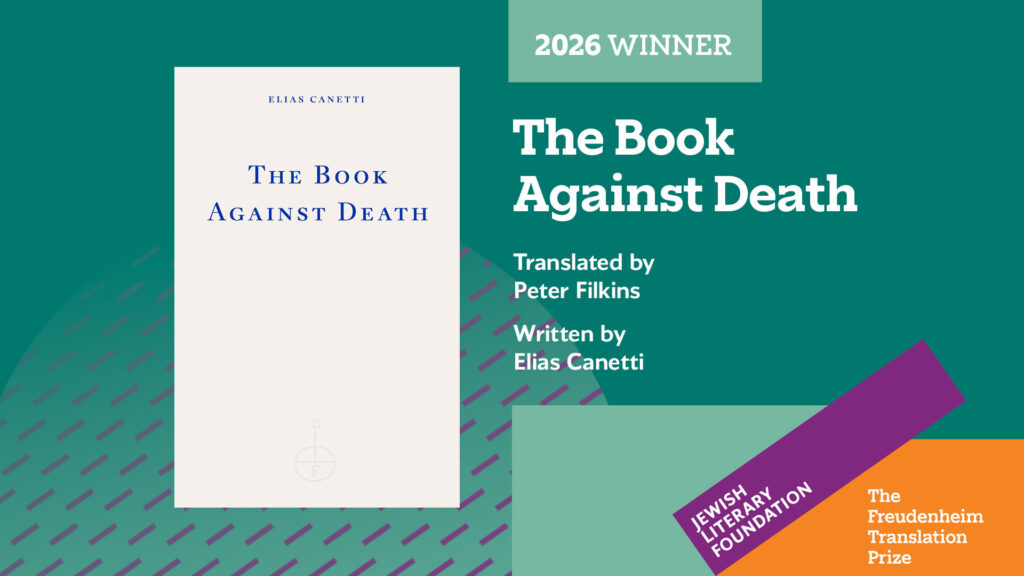
2026 Inaugural Prize Winner

Peter Filkins was announced as the winner of the inaugural Freudenheim Translation Prize in an online event held on 12 February 2026. The judges praised Filkins’ translation of Elias Canetti’s The Book Against Death, published by Fitzcarraldo Editions, with chair of judges Boyd Tonkin commenting: 

“An intoxicating blend of memoir, vision and philosophy, The Book Against Death is a posthumous masterwork from one of the 20th century’s most powerful literary minds. Compiled over more than four decades, Elias Canetti’s lyrical, erudite and passionate reflections on the deepest questions of life and death find their home in English thanks to Peter Filkins’s masterly translation.”
 
The judges also highly commended Tina Kover’s translation of The Postcard by Anne Berest and congratulated all the shortlisted authors whose work demonstrated the skill and insight of literary translators.

2026 Shortlist

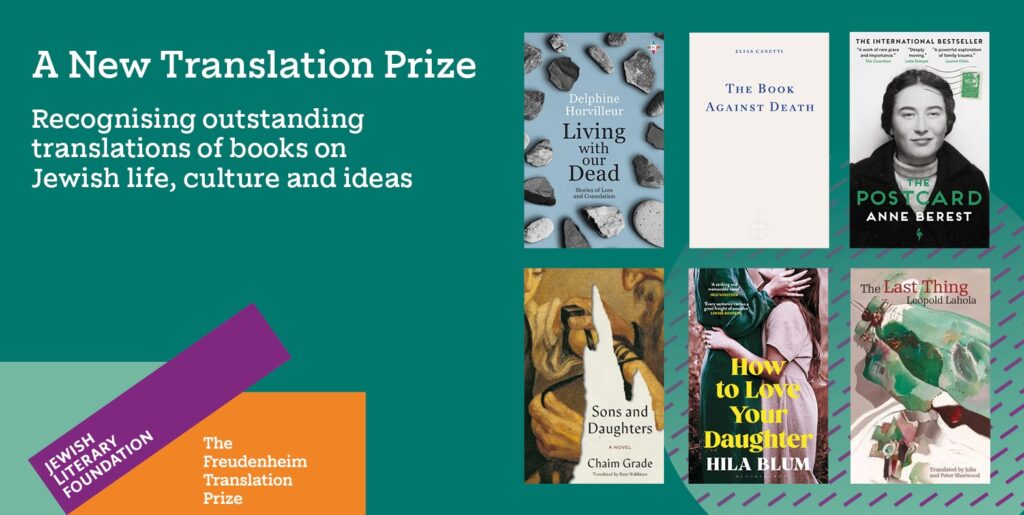
Six outstanding books of fiction and non-fiction were shortlisted for the inaugural Freudenheim Translation Prize. This international prize celebrates excellence in translating fiction and non-fiction into English, highlighting the power of Jewish literature to engage international and diverse audiences. 

The shortlist titles were:

  • The Postcard by Anne Berest, translated by Tina Kover
  • How to Love Your Daughter by Hila Blum, translated by Daniella Zamir
  • The Book Against Death by Elias Canetti, translated by Peter Filkins
  • Sons and Daughters by Chaim Grade, translated by Rose Waldman
  • Living with Our Dead by Delphine Horvilleur, translated by Lisa Appignanesi
  • The Last Thing by Leopold Lahola, translated by Julia & Peter Sherwood

The 2026 judging panel was chaired by journalist, critic and former Independent literary editor Boyd Tonkin, who was joined by journalist and broadcaster Hephzibah Anderson and author, broadcaster and educator Rabbi Shoshana Boyd Gelfand.

Boyd Tonkin said of the shortlist:
 
“The shortlist for the inaugural Freudenheim Prize invites readers to enjoy both extraordinary literary rediscoveries and urgent contemporary voices. Novels, short stories, memoir and philosophy all feature in a selection of books that includes outstanding translations from Yiddish, Hebrew, Slovak, French and German. The shortlisted works span many aspects of Jewish experience past and present, the dramas and tragedies of the 20th century, and the deepest questions of life and death, faith and doubt. We warmly recommend all our chosen titles.“
 

Open to translators worldwide, the prize recognises outstanding books that explore Jewish themes, history, identity or culture – or are of significant interest to Jewish and wider audiences. Sponsored by Tom and Leslie Freudenheim in honour of Adam Freudenheim, the prize offers a £3,000 award to the winning translator, introducing international Jewish writing to new readers.

The 2026 judging panel was chaired by journalist, critic and former Independent literary editor Boyd Tonkin, who was joined by journalist and broadcaster Hephzibah Anderson and author, broadcaster and educator Rabbi Shoshana Boyd Gelfand.

As Boyd Tonkin writes:

“Translations have long afterlives across space and time. They can live on in the minds and mouths of people who – like the millions of English-speakers who unwittingly quote the naturalised Hebrew and Greek of the 1611 Bible every day – never give a thought to the art. Or craft. Or mystery. However we categorise what literary translators do, they deserve more than anonymity and invisibility. The Freudenheim Translation Prize will enrich the unfolding dialogue between peoples, cultures, ages and subjects that translation has always, crucially, helped to convene.”