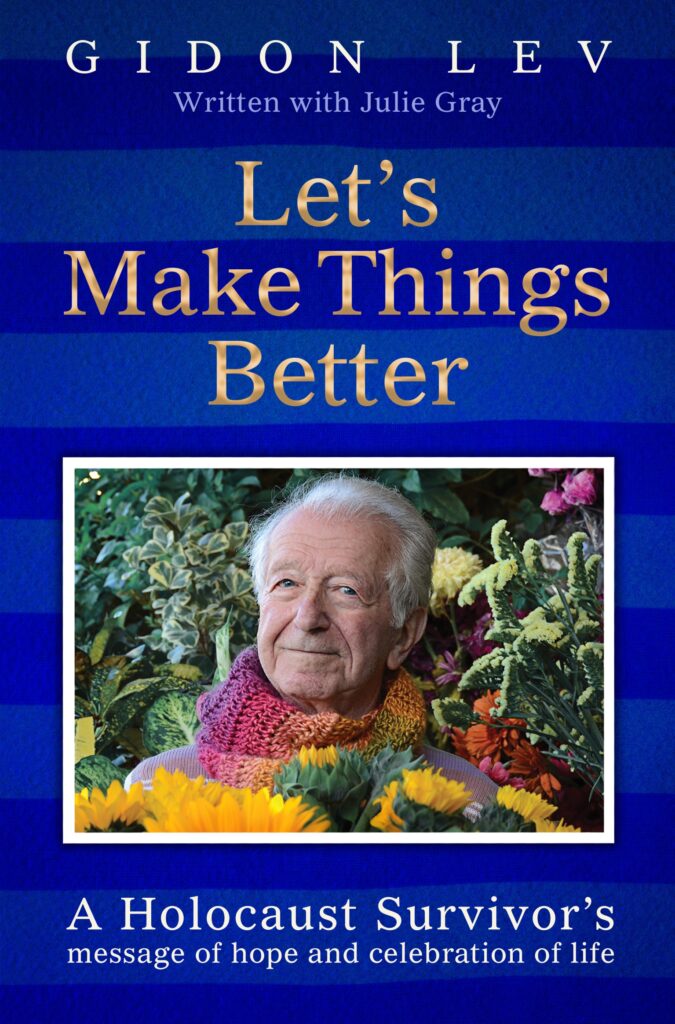
Let’s Make Things Better, by Gidon Lev and Julie Gray, traces one Jewish life across nearly a century of upheaval and transformation, from prewar Czechoslovakia to the aftermath of October 7th. From Goebbels to TikTok.
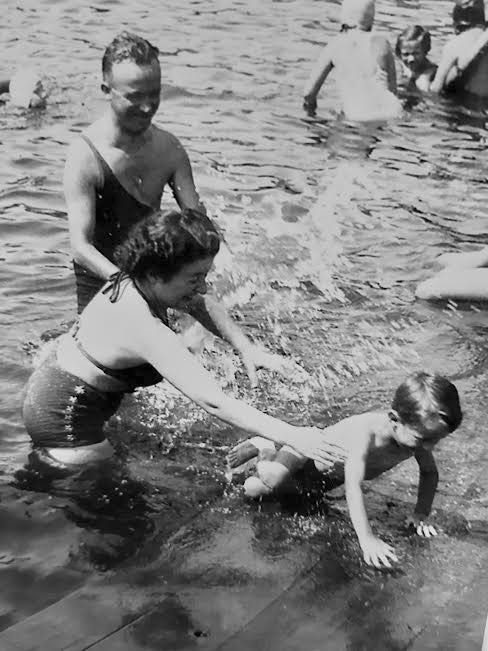
Born in Karlovy Vary in 1935, Gidon spent the first years of his life in an assimilated, secular Jewish family before the Nazi occupation forced his family to flee to Prague in 1938. Too young to understand why Jews were suddenly being persecuted, or even what being Jewish fully meant, he spent four formative years imprisoned in Theresienstadt.
The Holocaust is, inevitably, the defining historical event of Gidon’s life, but this book resists reducing him to that experience alone. One of the most unusual and compelling aspects of Lev’s perspective is that he is still actively engaging with Jewish identity, memory, Israel, antisemitism, and public life in real time, more than eighty years after the war. The book therefore functions not only as testimony, but as an ongoing conversation between past and present.
After the war, Gidon immigrated to Israel as a shy young man and became deeply involved in the HaShomer HaTzair movement during the formative years of the state. Over the decades, he witnessed Israel’s evolution alongside dramatic shifts in Jewish identity worldwide, including the rise of digital culture and social media. In his nineties, through TikTok and other platforms, Gidon unexpectedly became a public figure, speaking directly to younger audiences about history, antisemitism, resilience, and everyday life.
What makes Lev’s voice especially distinctive is its refusal to become sanctified or one-dimensional. Holocaust survivors are often spoken about in reverential or symbolic terms, but Gidon writes with humor, frankness, contradiction, practicality, and emotional directness. He emerges not as a historical artifact or moral emblem, but as a fully alive human being: opinionated, funny, wounded, resilient, and deeply engaged with the present moment.
The book also reflects a broader Jewish question that feels particularly urgent now: how memory evolves as history moves further away from lived experience, yet somehow becomes newly relevant again. The antisemitism that shaped the beginning of Gidon’s life has re-emerged in forms that feel disturbingly familiar, lending the book an immediacy that is difficult to ignore.
Ultimately, Let’s Make Things Better is not simply about survival or remembrance. It is about continuity: how a Jewish life, shaped by catastrophe, continues to evolve across generations, technologies, countries, and identities while remaining unmistakably itself.