
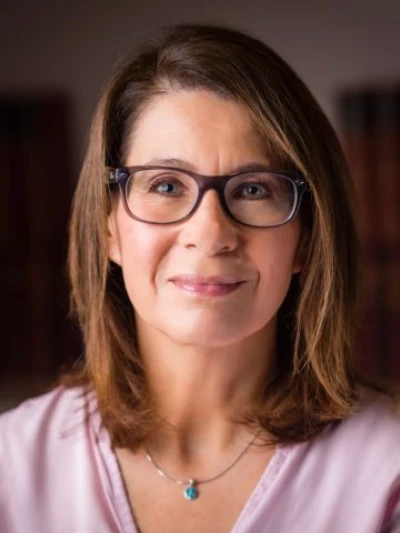
Debra Barnes is the author of The Young SurvivorsSince 2021 she has told audiences at More House, The Urswick School, St Margaret’s Bushey, Yavneh College and Notting Hill Prep School the story of her mother’s survival of the Holocaust. Debra’s grandparents and two of her mother’s siblings, one of them her twin sister, were murdered in Auschwitz. She painted a very vivid and moving picture of how her family resident in Metz at the beginning of the war was torn apart, deepening her audience’s knowledge and understanding of the Holocaust.
Debra runs the My Story project at the Association of Jewish Refugees which produces life story books for Holocaust survivors, their families and friends. She discovered that the only way she could cope with the overwhelming emotions involved in telling her mother’s story was to cast it as a historical novel. The Young Survivors has won much praise as a novel.
There are two compelling stories in Debra’s talk, one is that of Georgette and her siblings, the youngsters of the title and the other is of Debra’s experiences as she researched the family’s history and the murderous times in which they lived.
Debra’s presentation is suitable for pupils in the last year of primary school and Years 7 to 13 in secondary school.
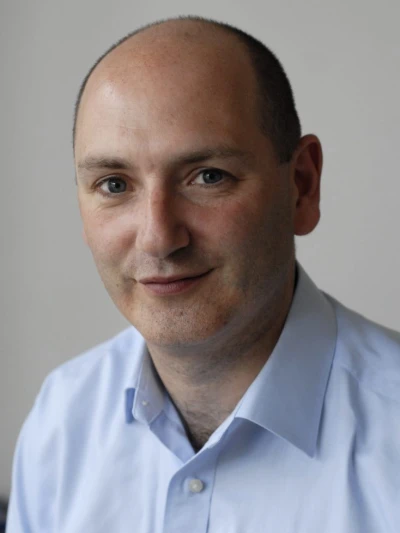
David Bolchover’s book, The Greatest Comeback: From Genocide to Football Glory, a biography of the football coach Béla Guttmann, was shortlisted for the William Hill Sports Book of the Year. His first book is the international best-seller The 90-Minute Manager, which looks at the lessons that business managers can learn from football managers.
A review of The Greatest Comeback in The Times sums up the book’s appeal, “Moving, original, full of insight, this is a gripping tale told by a skilled storyteller. “You don’t need to be interested in the Holocaust to find this fascinating account of some great footballing moments absorbing. And you don’t need to be interested in football to want to learn about this tale of survival. But if you are by chance interested in both, you will find this book extraordinary.” David has spoken at our events held at City of London School, David Game College and Yavneh College.
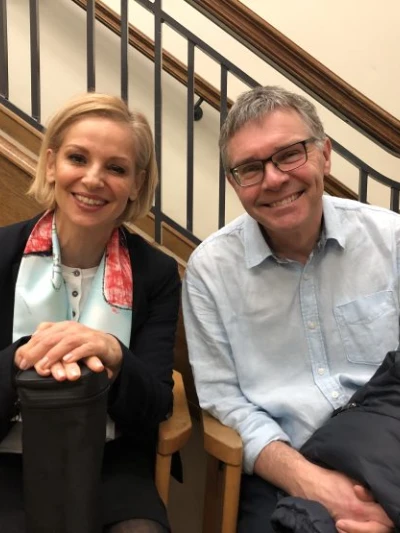
Noemie Lopian, is a GP and the translator of her late father’s book, “The Long Night.” Derek Niemann is the author of “A Nazi in the Family,” an account of his discovery of his grandfather’s role in the SS. The two writers are friends and in JBW Schools Events presentation at The Urswick School and More House they contrasted the experiences and values of Neomie’s father, Dr Ernst Bornstein, with those of Derek’s grandfather, Karl Niemann.
“The Long Night” describes Dr Ernst Bornstein’s wartime incarceration in seven concentration camps from 1939 until 1945 and the forced marches he endured at the end of that time. In “A Nazi in the Family” Derek Niemann explores his grandfather’s descent into darkness and the effect the revelation of his Nazi career has on the author and other members of the Nazi’s family.
Speaking online
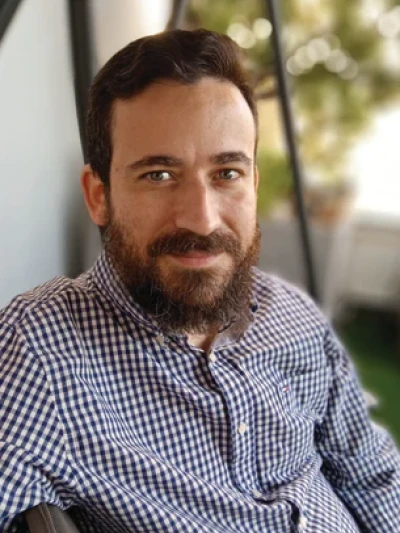
What makes a belief or a lifestyle rational? How much evidence do you need before deciding to act on a belief? If your religious beliefs are tightly bound up with your particular experiences and upbringing, doesn’t that undermine their reliability? All these questions, and more, come to the fore in Samuel Lebens’s A Guide for the Jewish Undecided. Bringing cutting-edge philosophy, science, and decision theory into conversation with Jewish tradition, this book makes the case that Jews today have cogent reasons to embrace Judaism and its practices. Moreover, this embrace is the most viable way in which they can answer the call to human responsibility.
Sam Lebens is Associate Professor of Philosophy at the University of Haifa.
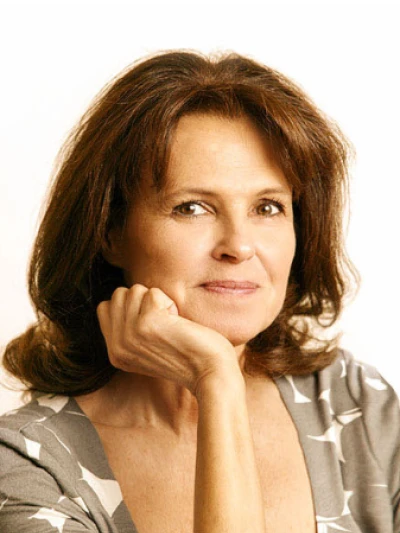
Monica Porter was born in Budapest, Hungary. Her family escaped the country in the wake of the failed 1956 Revolution, and she grew up in New York before moving to London after finishing high school. She began her career in journalism aged 22 on the weekly Local Government Chronicle. Over the decades she has written articles for most Fleet Street newspapers and numerous magazines, as well as six non-fiction books. Her most recent book, a middle-grade children’s novel, was published in spring 2022.
Three of Monica’s books deal with the themes of the Second World War, the Holocaust and anti-Nazi resistance.
Deadly Carousel tells the wartime story of Monica’s mother, celebrated singer Vali Racz, who rescued a group of Jewish friends in Nazi-occupied Budapest in 1944, by secretly harbouring them in her home for eight months. Inadvertently betrayed to the Gestapo, she was imprisoned and interrogated, but gave nothing away. All of her hidden fugitives evaded capture and survived the war. In 1991 Vali Racz was honoured in Israel, named a Righteous Among the Nations by Yad Vashem.
Children Against Hitler brings together a dozen stories of children from around occupied Europe who took part in bold and resourceful acts of resistance. They were couriers, produced underground newspapers, escorted downed Allied airmen to safety, sabotaged Nazi trains and military installations, forged identity documents for Jews and others needing false identities, and even assassinated Nazi officials and traitors. Their youth and air of guilelessness meant they could slip more easily than adults under the secret police’s radar.
These brave youngsters came from all backgrounds – they were high school drop-outs and social misfits from blue collar families, as well as bookish, privately-educated children of the elites. What united them was determination to strike back at an enemy that had deprived them of their freedom, their dignity, and their childhood.
Benny and Bobby Versus Adolf is a quirky novel for children, set in wartime Berlin, in which two laboratory mice given to a young Jewish boy as pets turn into unexpected heroes. When the boy and his family must assume new identities and flee Berlin to escape deportation, the mice, left behind in their apartment, wreak havoc on the Gestapo family that moves in. Their devastating invasions – in league with their new allies, the building’s house mice – end up saving the lives of the Jewish family and the resistance members who helped them. To discover how, read to the end of the story…
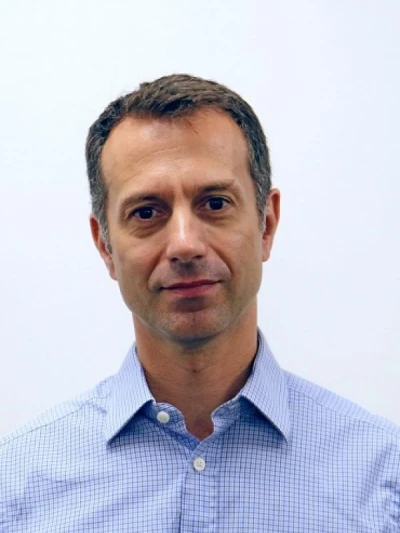
Dr Rich’s new book is called Everyday Hate: How antisemitism is built into our world – and how you can change it.
The publisher’s description of the book follows:
Antisemitism is supposed to have disappeared long ago, but despite our abhorrence of racism and oppression in all its forms, this ancient prejudice continues to thrive. Anti-Jewish hate crime is rising, Jewish blood is spilt in Europe once more and arguments over antisemitism, whether in politics or music, theatre or sport, are increasingly hard to avoid. At a time of economic, political and social turmoil, fuelled by conspiracy theories on your smartphone or conflict in the Middle East, antisemitism is back, and we need to know why.
It would be tempting to put this down to a handful of extremists, but antisemitism endures at an everyday level in the stereotypes and assumptions about Jews that are woven into the fabric of our world. It is these almost-unnoticed prejudices that perpetuate violent hatred, and until we all understand where they came from, how they are sustained and how they can be challenged, they will continue to do so.
Blending personal anecdotes, contemporary examples and historical insights, Everyday Hate takes you on a journey through this contentious and often confusing subject. Spanning Shakespeare to South Park, Israel to Covid-19 and ancient stereotypes to internet memes, it reveals surprising truths about how antisemitism continues to thrive in the interactions, assumptions and views of decent people around the world – and how we can change this for the better.
Dr Rich is the Director of the Community Security Trust, a British charity whose purpose is to provide safety, security, and advice to the Jewish community in the UK.
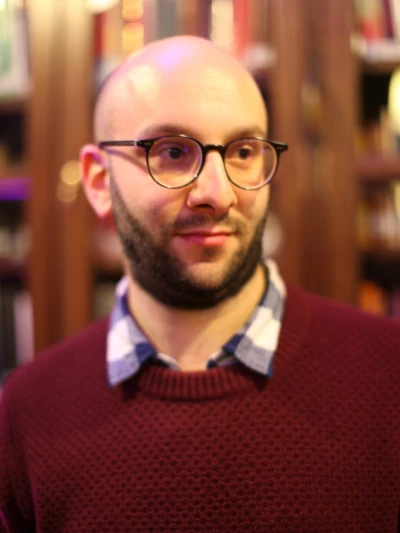
In 1946 many Jewish soldiers returned to their homes in England imagining that they had fought and defeated the forces of fascism in Europe. Yet in London they found a revived fascist movement inspired by Sir Oswald Mosley and stirring up agitation against Jews and communists. Many felt that the government, the police and even the Jewish Board of Deputies were ignoring the threat; so they had to take matters into their own hands, by any means necessary. In his book We fight Fascists: The 43 Group and Their Forgotten Battle for Post-war Britain Daniel Sonabend tells how Forty-three Jewish servicemen met together and set up a group that tirelessly infiltrated meetings, and broke up street demonstrations to stop the rebirth of the far right. The group included returned war heroes; women who went undercover; and young Jews, such as hairdresser Vidal Sassoon, seeking adventure. From 1947, the 43 Group grew into a powerful troop that could muster hundreds of fighters turning meetings into mass street brawls at short notice. The history of the 43 Group is not just a gripping story of a forgotten moment in Britain’s post war history; it is also a timely lesson in how to confront fascism, and how to win.
In 2020 Daniel spoke at JBW School Events at City of London School to the Sixth Form students at St James Boys’ and Girls’ Schools, and in 2022 to Sixth form students at Immanuel College.
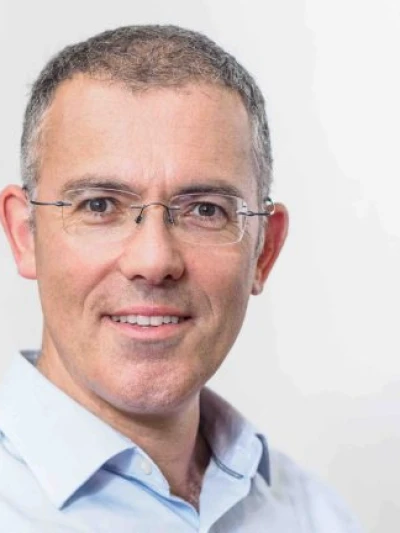
Adam Taub graduated in natural sciences at Cambridge and then qualified as a lawyer. For the past ten years he has headed the Institute of Directors’ programme for training leaders in presentational skills. He is the co-founder of Etgar, a very successful inter school quiz competition for ten-year-olds; he developed, with Rabbi Dr Rafi Zarum, a course for the study of the Bible in 25 sessions at the London School of Jewish studies and a year-long course, The Sages of the Mishnah, which explores the upheaval that followed the destruction of the Second Temple.
Among the titles he has suggested for his talks are:
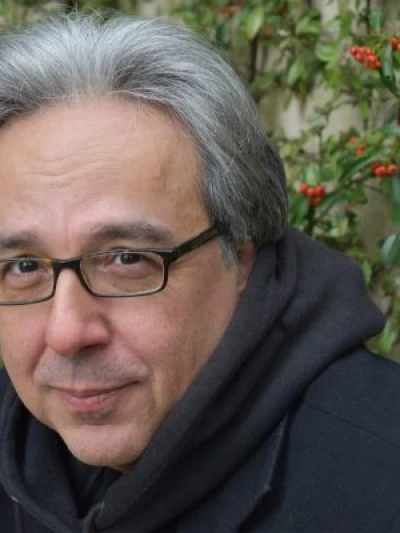
Dr Frank Tallis is an author and clinical psychologist, whose area of expertise is obsessive clinical disorder, (OCD). He has held lecturing posts in clinical psychology and neuroscience at the Institute of Psychiatry and King’s College, London. He has written crime novels, including the collection of novels known as The Liebermann Papers and Vienna Blood for which he has received several awards.
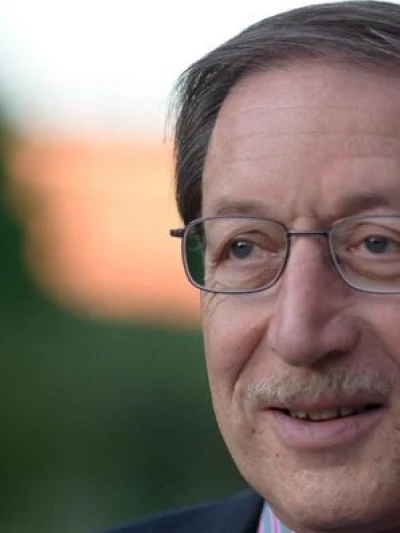
Speaking online
Bernard Wasserstein, an immensely distinguished historian, is the author of Vanishing Diaspora: The Jews in Europe since 1945 (London: Hamish Hamilton, and Harvard UP, 1996), which has been translated into Dutch, German, French, and Romanian; and Barbarism and Civilization: A History of Europe in Our Time (Oxford UP, 2007).
His latest book is “A small town in Ukraine: the place we came from and went back to.”
The following paragraphs are extracts from his publisher’s description of the book.
“Decades ago, Bernard Wasserstein set out to uncover the hidden past of the town forty miles west of Lviv where his family originated: Krakowiec (Krah-KOV-yets). In this book he recounts its dramatic and traumatic history. In particular he wanted to observe and understand how some of the great forces that determined the shape of our times affected ordinary people.’
Wasserstein traces the arc of history across centuries of religious and political conflict, as armies of Cossacks, Turks, Swedes and Muscovites rampaged through the region. In the Age of Enlightenment, the Polish magnate Ignacy Cetner built his palace at Krakowiec and, with his vivacious daughter, Princess Anna, created an arcadia of refinement and serenity. Under the Habsburg emperors after 1772, Krakowiec developed into a typical shtetl, with a jostling population of Poles, Ukrainians and Jews.
In 1914, disaster struck. ‘Seven years of terror and carnage’ left a legacy of ferocious national antagonisms. During the Second World War the Jews were murdered in circumstances harrowingly described by Wasserstein. After the war the Poles were expelled and the town dwindled into a border outpost. Today, the storm of history once again rains down on Krakowiec as hordes of refugees flee for their lives from Ukraine to Poland.